
Analysis of the Impact of U.S. Sanctions on Venezuela on the International Oil Market and Investments
Unlock More Features
Login to access AI-powered analysis, deep research reports and more advanced features
About us: Ginlix AI is the AI Investment Copilot powered by real data, bridging advanced AI with professional financial databases to provide verifiable, truth-based answers. Please use the chat box below to ask any financial question.
Related Stocks
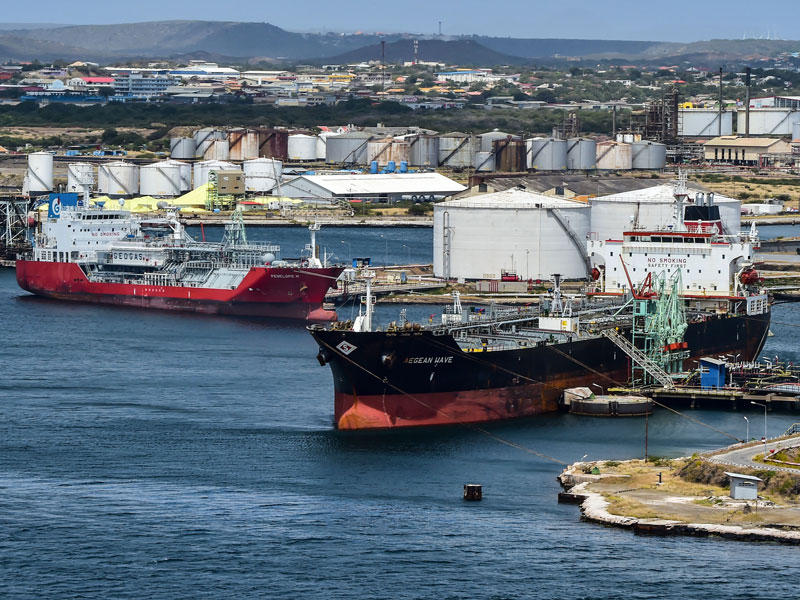
The new round of U.S. sanctions on Venezuela’s Maduro regime (effective December 23, 2025) [1][4], whose core measure is to intercept and block oil tankers carrying Venezuelan crude oil, has triggered multi-dimensional chain reactions in the market.
- International Oil Market: The sanctions triggered concerns about supply risks; Brent crude and WTI crude prices rose by approximately 2-3% respectively compared to before the sanctions (December 17), closing at $62/bbl and $58/bbl on December 23 [3][5][6]. However, due to the continued pressure of global oversupply, oil prices did not fluctuate sharply, as the market weighed supply risks against weak demand [3].
- Energy Company Stock Prices: As energy giants with oil business ties to Venezuela, Chevron (CVX) and Exxon (XOM) saw their stock prices rise moderately after the sanctions [0]. Among them, Exxon’s stock price rose by 0.80% on December 23, reflecting the market’s moderate pricing of supply risks [0].
- Latin America Investment Risks: The sanctions have intensified regional geopolitical tensions, and the escalation of U.S. military operations has led to a decline in investor confidence [9]. Market risk aversion has heated up, with gold and silver prices rising sharply [9]. Meanwhile, analysts worry that the sanctions may push Latin American countries to seek cooperation with U.S. geopolitical rivals, further affecting the regional investment environment [10].
- Limitations of Sanction Effectiveness: Although analysts expect Venezuela’s oil exports to drop by about 20% [10], the existence of the “dark fleet” (informal tanker network) may ease the pressure of export decline [10], resulting in the actual impact of the sanctions on the oil market being lower than expected.
- Differentiation in Market Sentiment: The moderate rise in energy stocks coexists with the surge in safe-haven asset prices, reflecting different market expectations of the sanctions’ impact: the energy market focuses on supply contraction, while the investment market is more worried about the spread of geopolitical risks [0][9].
- Long-term Geopolitical Impact: The U.S. blockade measures may weaken its influence in Latin America [10], pushing countries in the region to adjust their diplomatic and economic strategies, which will have a structural impact on the long-term investment environment.
- Risks: 1. Escalation of sanctions may trigger geopolitical conflicts between Venezuela and the U.S. and neighboring countries, intensifying instability in Latin America [7][9]; 2. If Venezuela’s oil production cuts exceed expectations, it may lead to fluctuations in global oil prices [10]; 3. Rising investment risks in Latin America may lead to capital outflows [9].
- Opportunities: The sanctions may provide market share expansion opportunities for other oil-producing countries (such as OPEC members); the increased demand for safe-haven assets brings short-term opportunities for precious metal investments [9].
The new U.S. sanctions on Venezuela have had a moderate impact on the international oil market, with oil prices rising slightly before stabilizing; energy company stock prices have reacted limitedly, showing a moderate upward trend; investment risks in Latin America have heated up, pushing up the prices of safe-haven assets. The effect of the sanctions is limited by factors such as the “dark fleet”, and the long-term geopolitical impact remains to be observed.
(Note: Some remarks about the U.S. going to war with Venezuela have not been officially confirmed [7], and the specific magnitude of Venezuela’s oil export decline is still an analyst’s forecast.)
Insights are generated using AI models and historical data for informational purposes only. They do not constitute investment advice or recommendations. Past performance is not indicative of future results.
About us: Ginlix AI is the AI Investment Copilot powered by real data, bridging advanced AI with professional financial databases to provide verifiable, truth-based answers. Please use the chat box below to ask any financial question.