
Quantum Computing Stocks: Volatility Amid AI Analogies and Geopolitical Focus
Unlock More Features
Login to access AI-powered analysis, deep research reports and more advanced features
About us: Ginlix AI is the AI Investment Copilot powered by real data, bridging advanced AI with professional financial databases to provide verifiable, truth-based answers. Please use the chat box below to ask any financial question.
Related Stocks
On December 23, 2025, MarketWatch published an article framing quantum computing stocks as analogous to AI stocks five years prior—characterized by speculative trading, unprofitable financials, but significant long-term growth potential. The article highlighted the Pentagon’s classification of quantum computing as a “new Manhattan Project” and noted China’s close competitive stance [1].
The sector experienced notable volatility around the article’s release. On December 22 (pre-article), major quantum stocks saw substantial gains (likely driven by preliminary news about the Pentagon’s initiative or sector-specific catalysts not fully detailed in available data): IonQ (IONQ: +7.98%), Rigetti Computing (RGTI: +9.40%), D-Wave Quantum (QBTS: +16.38%), and Quantum Computing Inc. (QUBT: +12.34%) [0]. On the article’s publication day (December 23), profit-taking and potential market overreaction led to declines: IONQ (-2.54%), RGTI (-3.05%), QBTS (-4.87%), QUBT (-2.01%) [0]. Further declines persisted on December 24, likely due to ongoing profit-taking and low liquidity (Christmas week trading) [0]. The broader S&P 500 and NASDAQ indices had minimal moves during this period, confirming the volatility was sector-specific [0].
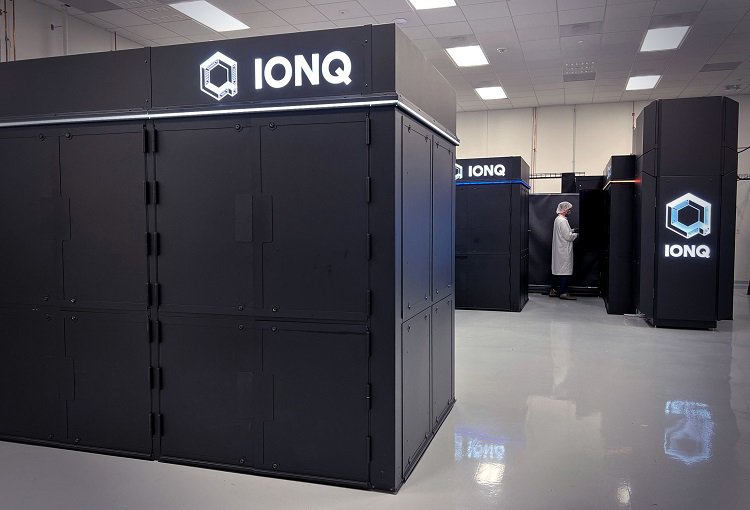
IonQ, with a $17.36B market cap and current price of $49.01 (as of December 24, 2025), is representative of the sector’s status: unprofitable (net profit margin: -1836.32%, P/E: -9.83x) but with an analyst consensus “Buy” rating and a 42.8% upside target to $70.00 [0]. This aligns with the article’s AI analogy, as early AI stocks also had negative profitability but strong analyst confidence in future adoption [1].
- Sector Volatility Reflects Early-Stage Development: The sharp gains followed by rapid declines mirror the speculative nature of emerging technologies, consistent with AI stocks five years ago. This volatility stems from investor excitement about long-term potential clashing with the uncertainty of near-term commercialization [0][1].
- Geopolitical Competition Drives Interest: The Pentagon’s “Manhattan Project” framing and China’s competitive position have elevated quantum computing as a strategic technology, attracting investor attention to the sector’s geopolitical significance [1].
- Analyst Confidence Persists Despite Unprofitability: IonQ’s “Buy” consensus and significant upside target indicate that analysts believe in the company’s long-term value, even as it remains unprofitable. This suggests a focus on future growth trajectories over current financials [0].
- Risks:
- Early-Stage Technology Risk: Quantum computing is still in development, with commercialization timelines and applications uncertain. Most sector companies rely on future adoption for revenue growth [0][1].
- Geopolitical Risk: U.S.-China competition could lead to regulatory restrictions, supply chain disruptions, or increased investment volatility [1].
- Volatility Risk: The sector’s high price swings (e.g., QBTS’s 16.38% gain followed by a 13.13% cumulative decline in two days) highlight significant speculative risk [0].
- Regulatory Risk: As quantum computing advances, scrutiny of its applications (e.g., cybersecurity, defense) could impact sector growth [0].
- Opportunities:
- Long-Term Growth Potential: If quantum computing scales commercially as AI has, the sector could deliver substantial returns over the next five to ten years [1].
- Strategic Investment from Governments: Increased Pentagon and global government investment may accelerate research and commercialization [1].
This analysis is based on a MarketWatch article [1] comparing quantum computing stocks to AI stocks five years ago. Major quantum stocks (IONQ, RGTI, QBTS, QUBT) experienced significant volatility around the article’s publication, with pre-article gains followed by post-article declines. IonQ, a leading company in the sector, has a large market cap, negative profitability, but strong analyst confidence. The sector faces risks related to early-stage technology, geopolitical competition, volatility, and regulation, but offers long-term growth potential analogous to early AI.
Insights are generated using AI models and historical data for informational purposes only. They do not constitute investment advice or recommendations. Past performance is not indicative of future results.
About us: Ginlix AI is the AI Investment Copilot powered by real data, bridging advanced AI with professional financial databases to provide verifiable, truth-based answers. Please use the chat box below to ask any financial question.