
Hyperscale Data Michigan AI Campus Build-Out: NVIDIA Blackwell Infrastructure Analysis
Unlock More Features
Login to access AI-powered analysis, deep research reports and more advanced features
About us: Ginlix AI is the AI Investment Copilot powered by real data, bridging advanced AI with professional financial databases to provide verifiable, truth-based answers. Please use the chat box below to ask any financial question.
Related Stocks
This analysis is based on the PR Newswire announcement [1] published on September 26, 2025, detailing Hyperscale Data’s strategic initiative to convert its Michigan data center for AI infrastructure support.
Hyperscale Data’s Michigan facility build-out represents a significant strategic pivot from pure-play Bitcoin mining to a hybrid digital infrastructure model supporting both AI and blockchain workloads [1]. The company’s existing physical infrastructure provides substantial advantages with a 34.5-acre campus featuring 617,000 square feet of data center space and 28 megawatts of available power capacity [1]. Currently operating 16 NVIDIA GPU servers in a dedicated data hall, the company is implementing a phased deployment of NVIDIA Blackwell infrastructure [1].
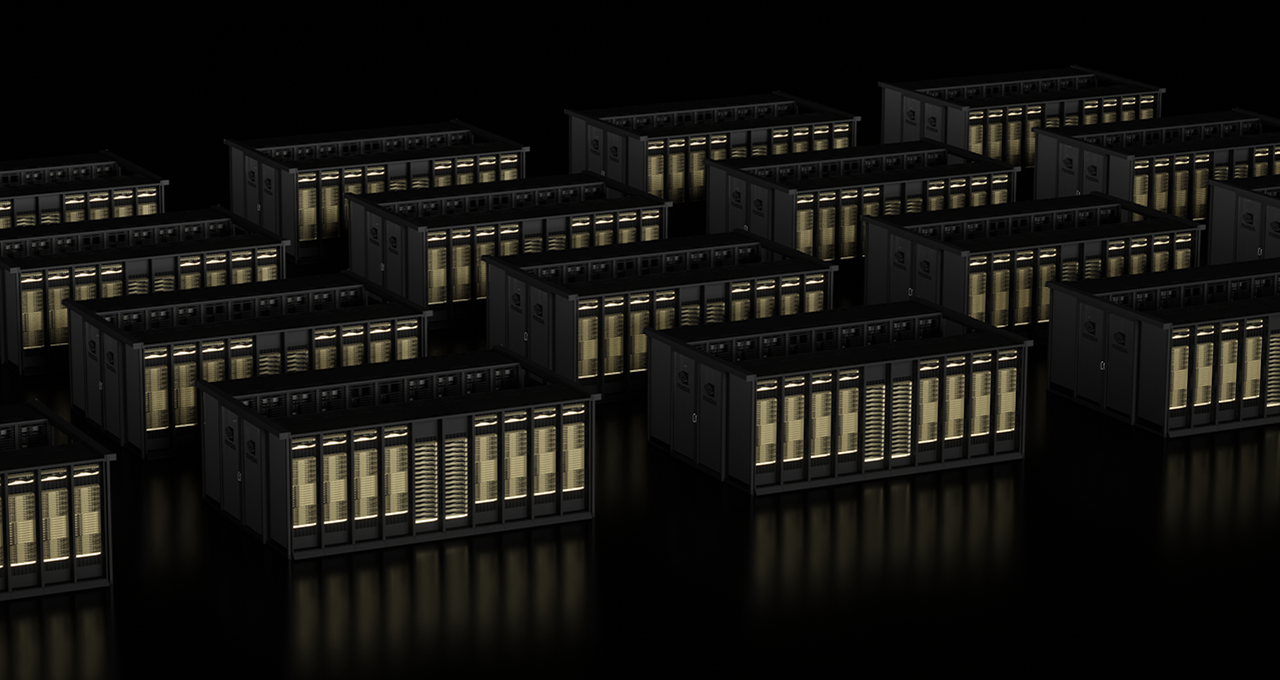
The build-out specifically targets NVIDIA’s Blackwell architecture, which delivers 40x performance improvement over the previous Hopper generation for inference workloads [2]. Blackwell systems function as rack-scale solutions that operate as single, massive GPUs, representing cutting-edge AI infrastructure [2]. This positions Hyperscale Data at the intersection of two major technology trends: the explosive growth of AI infrastructure and the evolution of digital asset technologies.
The AI infrastructure market is experiencing remarkable growth, with global market size reaching $87.6 billion in 2025 and projected to expand to $197.64 billion by 2030 (17.71% CAGR) [5]. The U.S. market specifically shows strong potential at $50.0 billion in 2025 with 18.8% CAGR growth forecast [4]. The AI data centers segment demonstrates even more explosive growth potential, expected to reach $165.73 billion by 2034 (28.34% CAGR) [6].
Hyperscale Data faces competition from established data center leaders including Equinix (18.9% market share), Digital Realty, NTT Communications, and CoreSite [3], as well as specialized AI infrastructure providers like CoreWeave and Lambda Labs. However, the company’s dual-use capability provides unique differentiation in the market.
The dual-use model represents an innovative approach to data center utilization, allowing the same physical infrastructure to serve both high-performance AI computing and cryptocurrency mining workloads [1]. This flexibility is particularly valuable given the cyclical nature of cryptocurrency markets and the sustained growth trajectory of AI demand. The ability to dynamically allocate resources between workloads based on market conditions creates operational resilience.
Rather than complete facility conversion, Hyperscale Data implements a gradual build-out maintaining existing operations while scaling AI capabilities [1]. This approach reduces capital risk and allows iterative optimization based on customer demand and technological evolution. The strategy enables continuous revenue generation during the AI build-out phase.
The Michigan facility benefits from strategic location advantages including proximity to major Midwest technology corridors, access to reliable and cost-effective power grid, natural cooling potential reducing operational costs, and business-friendly state policies for technology infrastructure. These factors contribute to competitive positioning in the AI infrastructure market.
The co-location of Bitcoin mining and AI infrastructure presents complex technical challenges related to power management, cooling systems, and network architecture. Historical patterns suggest hybrid facilities often encounter optimization difficulties during initial deployment phases. Additionally, the rapid pace of AI hardware advancement means current Blackwell infrastructure may face obsolescence pressure within 2-3 years, requiring continuous capital investment.
The AI infrastructure market is attracting significant investment from established players with greater resources and market presence. Competitors may introduce similar hybrid capabilities, potentially eroding Hyperscale Data’s first-mover advantage. As more capacity comes online, market pricing for AI compute services may face downward pressure, potentially impacting profitability margins.
The phased build-out requires substantial capital investment in an environment where the company has limited financial resources compared to major competitors. Historical patterns suggest potential challenges in securing favorable financing terms for smaller market participants. The timeline for full deployment may be affected by supply chain constraints, particularly for NVIDIA Blackwell components experiencing high global demand.
The convergence of AI and blockchain technologies creates unique opportunities for innovative service offerings. The company’s existing infrastructure scale provides significant expansion capacity, while the dual-use capability maximizes asset utilization. The rapidly growing AI infrastructure market presents substantial revenue potential, particularly for enterprise AI development, AI service providers, research institutions, and emerging blockchain/AI hybrid applications.
- 34.5-acre campus with 617,000-square-foot data center building [1]
- 28 megawatts of available power capacity [1]
- Current operations: 16 NVIDIA GPU servers in dedicated data hall [1]
- Phased deployment of NVIDIA Blackwell infrastructure [1]
- Global AI infrastructure market: $87.6 billion (2025) → $197.64 billion (2030), 17.71% CAGR [5]
- U.S. AI infrastructure market: $50.0 billion (2025) with 18.8% CAGR [4]
- AI data centers segment: $17.54 billion (2025) → $165.73 billion (2034), 28.34% CAGR [6]
- Dual-use capability serving both AI and blockchain markets [1]
- Physical scale providing significant expansion capacity [1]
- Power infrastructure supporting high-density computing [1]
- Operational flexibility for dynamic resource allocation [1]
- Hybrid infrastructure architecture maximizing asset utilization
- Phased deployment reducing capital risk
- Blackwell-ready infrastructure targeting cutting-edge AI performance
- Geographic advantages in Michigan technology corridor
Insights are generated using AI models and historical data for informational purposes only. They do not constitute investment advice or recommendations. Past performance is not indicative of future results.
About us: Ginlix AI is the AI Investment Copilot powered by real data, bridging advanced AI with professional financial databases to provide verifiable, truth-based answers. Please use the chat box below to ask any financial question.