
Fed Policy Dilemma and 2026 Emerging Markets Outlook: December 22, 2025 Market Reactions
Unlock More Features
Login to access AI-powered analysis, deep research reports and more advanced features
About us: Ginlix AI is the AI Investment Copilot powered by real data, bridging advanced AI with professional financial databases to provide verifiable, truth-based answers. Please use the chat box below to ask any financial question.
Related Stocks
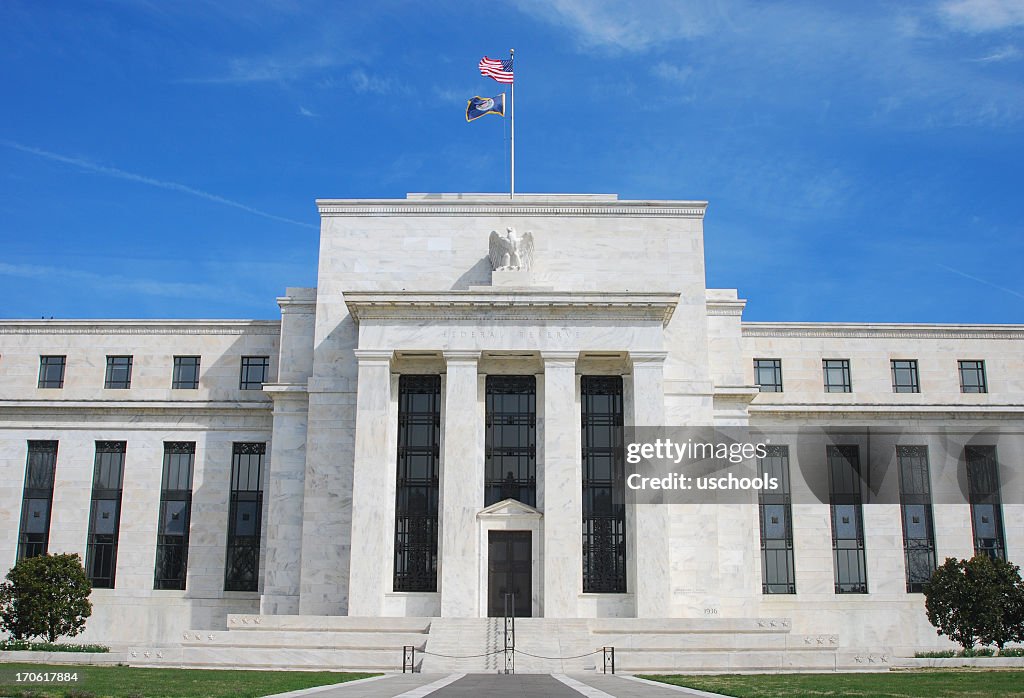
This report synthesizes findings from Market Catalysts’ video [1] and accompanying market data to examine two interconnected themes: the Federal Reserve’s 2026 policy challenges and the emerging markets growth outlook.
On December 22, 2025, U.S. equity markets reacted modestly to Fed policy uncertainty. The S&P 500 (+0.19%), Dow Jones Industrial Average (+0.31%), and NASDAQ Composite (-0.09%) showed mixed performance, with interest-rate-sensitive sectors (Utilities, +1.48%; Real Estate, +0.41%) leading gains as investors priced in potential 2026 rate adjustments [0]. Meanwhile, the iShares MSCI Emerging Markets ETF (EEM) rose 0.07% to $54.01, aligning with optimistic institutional outlooks for EM assets in 2026 [0].
The Fed’s policy dilemma stems from its dual mandate: recent data shows late 2025 labor market weaknesses (5.5 million workers in part-time roles for economic reasons, up 19.8% since September 2025) alongside persistent inflation concerns [5]. The central bank cut rates three times in 2025, but two members dissented in December, with divisions expected to carry into 2026—Deutsche Bank forecasts only one additional rate cut next year [4].
For emerging markets, 2025 marked the first year since 2020 that EM equities outperformed developed markets [2]. RBC Global Asset Management reports EM stocks trade at a 35% valuation discount to developed markets (their largest discount in 15 years), while Invesco’s 2026 outlook predicts further gains driven by a weaker U.S. dollar and reduced EM inflation pressures [2][3].
- Interconnected Policy and Market Impacts: Fed policy uncertainty ripples across both U.S. interest-rate-sensitive assets (e.g., Utilities, Real Estate) and EM markets (via U.S. dollar strength), creating correlated risk and opportunity drivers.
- EM Valuation Tailwinds: The 35% discount to developed markets provides a strong valuation buffer for EM assets, but realization depends on sustained U.S. dollar weakness and stable Fed policy.
- Labor Market as a Critical Variable: Rising part-time employment and short-term unemployment may force the Fed to prioritize employment over inflation, potentially accelerating rate cuts and boosting interest-rate-sensitive sectors.
- Fed Policy Volatility: Divisions among Fed members could lead to unexpected rate decisions, disrupting both U.S. fixed-income markets (e.g., TLT, -0.07% on December 22) and EM assets [4][0].
- EM Geopolitical and Regulatory Risks: China’s regulatory environment and broader geopolitical tensions could undermine positive growth outlooks [2].
- Labor Market Deterioration: Sustained weakness in employment data may trigger more aggressive Fed action, increasing market volatility [5].
- EM Growth Potential: Valuation discounts, a softer U.S. dollar, and improving global growth conditions create long-term opportunities for EM investors [2][3].
- Interest-Rate-Sensitive Sectors: Utilities and Real Estate may benefit from potential 2026 rate cuts, as shown by their December 22 outperformance [0].
- December 22, 2025 Market Performance: S&P 500 (6,878.48, +0.19%), Dow (48,362.69, +0.31%), NASDAQ (23,428.83, -0.09%), EEM ($54.01, +0.07%), TLT ($87.36, -0.07%) [0].
- Fed Policy Context: Three 2025 rate cuts, two December dissenters, Deutsche Bank forecasts one 2026 rate cut [4].
- EM Outlook: 2025 outperformance vs. developed markets, 35% valuation discount, Invesco predicts 2026 strength from weaker USD [2][3].
- Labor Market Data: 19.8% increase in part-time employment since September 2025, rising short-term unemployment [5].
Insights are generated using AI models and historical data for informational purposes only. They do not constitute investment advice or recommendations. Past performance is not indicative of future results.
About us: Ginlix AI is the AI Investment Copilot powered by real data, bridging advanced AI with professional financial databases to provide verifiable, truth-based answers. Please use the chat box below to ask any financial question.