
Disruptive Impact of Reusable Rocket Technology on Space Launch Services
Unlock More Features
Login to access AI-powered analysis, deep research reports and more advanced features
About us: Ginlix AI is the AI Investment Copilot powered by real data, bridging advanced AI with professional financial databases to provide verifiable, truth-based answers. Please use the chat box below to ask any financial question.
Related Stocks
-
Disruptive Changes in Cost Structure
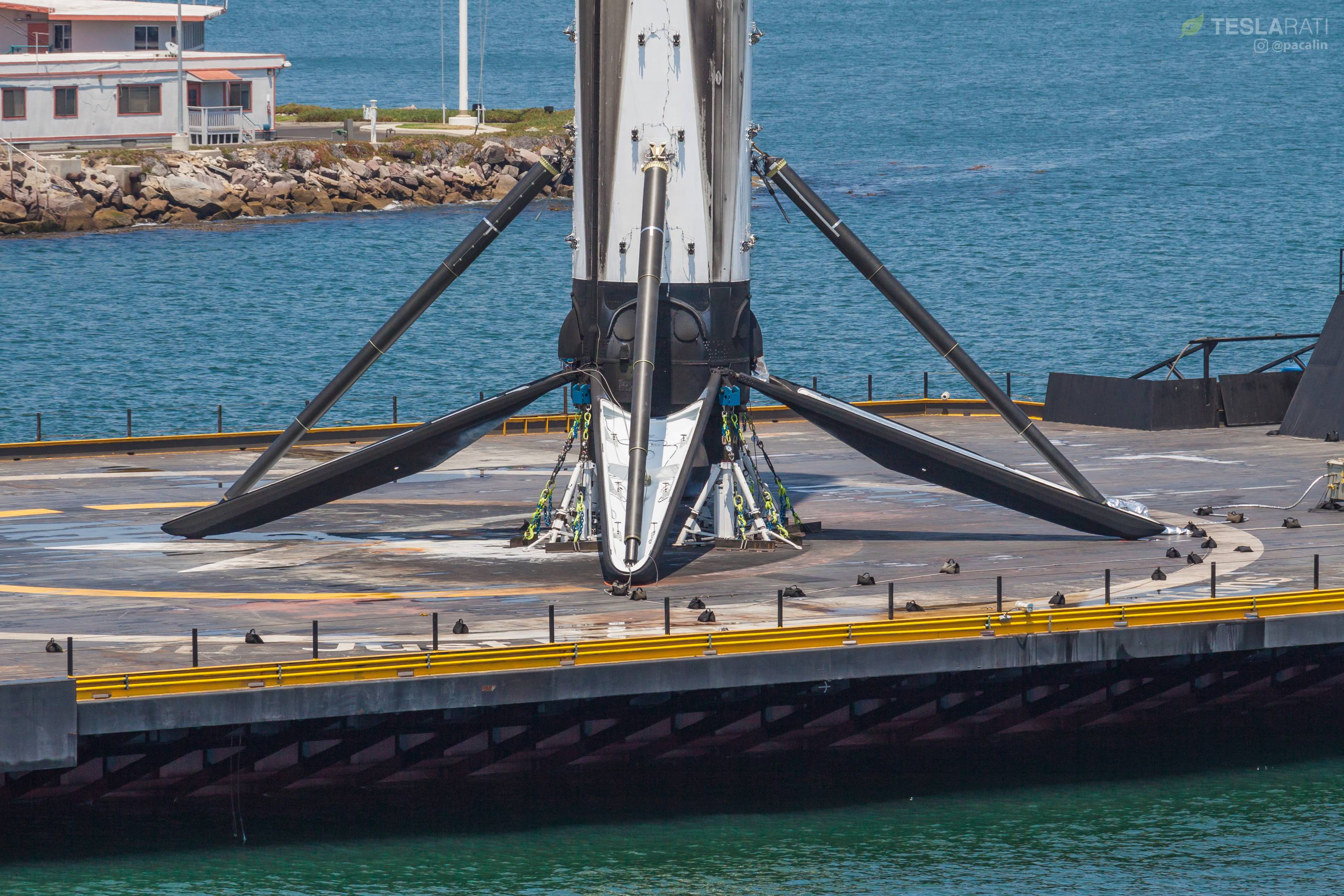
According to the TrendForce report, reusable rocket technology will reduce launch costs from $110-180 million (for disposable rockets) to $2-5 million after full recovery, a decrease of 88%-99% [1]. SpaceX’s Falcon 9 operational data also validates this trend: the reusable version costs approximately $67 million to launch, while the disposable version costs about $160 million, representing a 58% reduction [0]. Despite payload reduction (around 20%-30% [0], reserved for return fuel) and additional cost inputs (R&D expenses are 30%-40% higher than disposable rockets, plus recovery infrastructure construction costs [0]), the scale effect of multiple reuses after technology maturity will significantly offset these challenges. -
Reconstruction of Business Models
Traditional space launch services adopt a “single launch - single revenue” business model, limited by high costs and low frequency (annual launches are usually in single digits [0]). Reusable technology will drive the model to transition to “multiple reuse - high-frequency launches - diversified services”:- Increased launch frequency: Take SpaceX as an example; a single Falcon 9 rocket has achieved more than 10 reuses [0], and annual launch counts have grown from 8 in 2016 to 96 in 2024 [0];
- Emergence of new markets: Low-Earth orbit satellite constellation deployment (such as Starlink), space tourism, near-Earth orbit manufacturing, and other businesses with strong demand for low-cost, high-frequency launches will become mainstream [1];
- Diversified revenue models: Extending from pure launch service revenue to long-term revenue streams such as rocket recovery and maintenance services, satellite operation services [0].
-
Reshaping of Valuation Systems
Traditional valuation models focus on short-term cash flow, with the core being “single launch revenue × annual launch count” [0]. Reusable technology will drive the valuation logic to shift to “long-term cost advantage × scale growth potential”:- Time value of cost advantage: Cost savings in the coming years can be included in current valuation through discount models [0];
- Multiplier effect of scale: Market share expansion and marginal cost reduction brought by increased launch frequency will become important drivers of valuation [1];
- Premium from business boundary expansion: Growth potential of new businesses such as satellite operation and space tourism will give enterprises higher valuation multipliers [0]. For example, ARK Invest predicts that SpaceX’s valuation will reach $2.5 trillion by 2030, one of the core assumptions being the maturity and large-scale application of fully reusable rocket technology [1].
-
Technology Maturity is the Core Inflection Point
The cost advantage of reusable technology can only be realized after reaching a certain number of reuses (usually more than 3 times [0]). Therefore, whether an enterprise can quickly break through technical bottlenecks and improve rocket reuse rates will determine its competitive position and valuation performance. -
Market Pattern Will Concentrate on Leaders
High investment in technology R&D and recovery infrastructure will form entry barriers. Enterprises with first-mover advantages (such as SpaceX and Blue Origin) will further reduce costs through scale effects, squeezing the living space of small and medium-sized launch providers [0]. -
Industry Ecosystem Will Be Deeply Reconstructed
Low-cost launches will drive the development of the entire industrial chain, including upstream rocket component manufacturing and downstream satellite applications, forming a positive cycle of “low-cost launch → high-demand applications → technological iteration → lower-cost launch” [1].
- Technical risks: Technical challenges such as landing accuracy during rocket recovery and repeated service life of engines still need to be overcome [0];
- Financial risks: R&D and infrastructure investment may lead to short-term cash flow pressure. If technology promotion is not as expected, the investment return cycle may be prolonged [0];
- Regulatory risks: Increased space launch frequency will bring regulatory challenges such as orbital resources and space debris, which may increase operational costs and uncertainty [0].
- Market expansion: Low-cost launches will transform space launch services from a “luxury” for governments and large enterprises to a “regular service” for the mass market. The market size is expected to grow from about $18 billion in 2024 to about $60 billion in 2030 [1];
- Technology spillover: R&D of rocket recovery technology will drive technological progress in new materials, automatic control, artificial intelligence, and other fields, forming new business growth points [0];
- International cooperation: Technological cooperation and resource sharing in the global aerospace field will accelerate the popularization of reusable technology and cost reduction [1].
The impact of reusable rocket technology on space launch service companies is comprehensive and profound, driving their transformation from “high cost, low frequency, single-minded” to “low cost, high frequency, diversified”. The valuation system will also shift from short-term cash flow orientation to long-term cost advantage and scale growth potential orientation. Although facing technical, financial, and regulatory challenges, the long-term trend of industry development is clear, and enterprises with technical advantages and scale effects will gain greater development space. Investors should pay attention to enterprises’ technology maturity, reuse rate improvement speed, and new business layout to evaluate their long-term investment value.
Insights are generated using AI models and historical data for informational purposes only. They do not constitute investment advice or recommendations. Past performance is not indicative of future results.
About us: Ginlix AI is the AI Investment Copilot powered by real data, bridging advanced AI with professional financial databases to provide verifiable, truth-based answers. Please use the chat box below to ask any financial question.