
Analysis of the Impact of Thailand's November Automobile Production Growth on Southeast Asia's Automotive Industry Chain and Investment Opportunities
Unlock More Features
Login to access AI-powered analysis, deep research reports and more advanced features
About us: Ginlix AI is the AI Investment Copilot powered by real data, bridging advanced AI with professional financial databases to provide verifiable, truth-based answers. Please use the chat box below to ask any financial question.
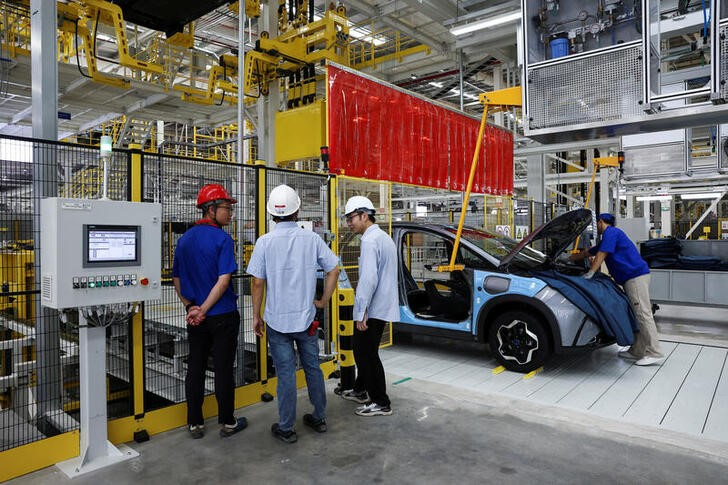
Thailand’s automobile production reached 130,222 units in November, a year-on-year increase of 11.06%[1], verifying the strong recovery trend of Southeast Asia’s automobile manufacturing industry. As Southeast Asia’s largest automobile production hub (known as the “Detroit of Asia”), Thailand’s production growth is mainly driven by two segments: electric vehicles (EV) and pickup trucks (PPV)[0].
Thailand’s automobile industry recovery will have a significant impact on the entire Southeast Asian automotive industry chain:
- Supply Chain Spillover Effect: The growth of Thailand’s automobile industry will directly drive demand for parts suppliers in neighboring countries (Indonesia, Malaysia, Vietnam, etc.), especially in EV-related components such as batteries and motors[1].
- Enhanced Industrial Synergy: As Thailand accelerates its transition to EVs, countries in the region will form closer industrial synergy in raw material supply (e.g., Indonesia’s nickel mines) and component manufacturing[0].
- EV Becomes Core Growth Driver: Thailand’s EV production accounted for a significant proportion of November’s growth, reflecting the accelerated implementation of the global automotive industry’s electrification trend in the Southeast Asian market[1].
- Accelerated Investment by Global Automakers: Thailand’s industrial recovery and EV transition are attracting increased investment from global automakers such as Japan and China, further consolidating its position as a regional production hub[1].
- Opportunity Window: EV-related fields (battery manufacturing, charging infrastructure, EV parts supply) will become major investment opportunities[1]; Thailand’s government support policies for EVs further enhance investment attractiveness[0].
- Risk Factors: Some countries in the region compete in EV industry chain layout, which may lead to supply chain dispersion risks[0]; external factors such as global chip shortages may still affect production stability[0].
Thailand’s November automobile production growth is an important signal of Southeast Asia’s automotive industry recovery, and its EV-driven growth model will reshape the regional industry chain pattern. Investors should pay attention to investment opportunities in EV-related segments, while considering factors such as regional competition and external supply chain risks.
Insights are generated using AI models and historical data for informational purposes only. They do not constitute investment advice or recommendations. Past performance is not indicative of future results.
About us: Ginlix AI is the AI Investment Copilot powered by real data, bridging advanced AI with professional financial databases to provide verifiable, truth-based answers. Please use the chat box below to ask any financial question.