
Inflation’s Impact on US Political Stability, Investor Sentiment, and Michigan Swing State Electoral Risks
Unlock More Features
Login to access AI-powered analysis, deep research reports and more advanced features
About us: Ginlix AI is the AI Investment Copilot powered by real data, bridging advanced AI with professional financial databases to provide verifiable, truth-based answers. Please use the chat box below to ask any financial question.
This analysis synthesizes news and social media insights to evaluate inflation’s role in U.S. politics and markets [1][2][5][7][11-14].
- Political Stability Impact: Inflation has become a highly divisive political issue, with partisan gaps in economic perceptions [7]. Republicans won the 2024 election partly due to inflation concerns, while Democrats secured 2025 governor races by emphasizing affordability [1][2]. As a long-standing critical swing state, Michigan’s voter sentiment on inflation could significantly alter national political outcomes.
- Investor-Consumer Sentiment Divergence: Despite consumer pessimism (University of Michigan Consumer Sentiment Index: 52.9 in December 2025 [11][13]), investor sentiment remains optimistic. The S&P 500 approached 6800 in December 2025, supported by strong holiday spending and positive corporate profit outlooks [12][13][14].
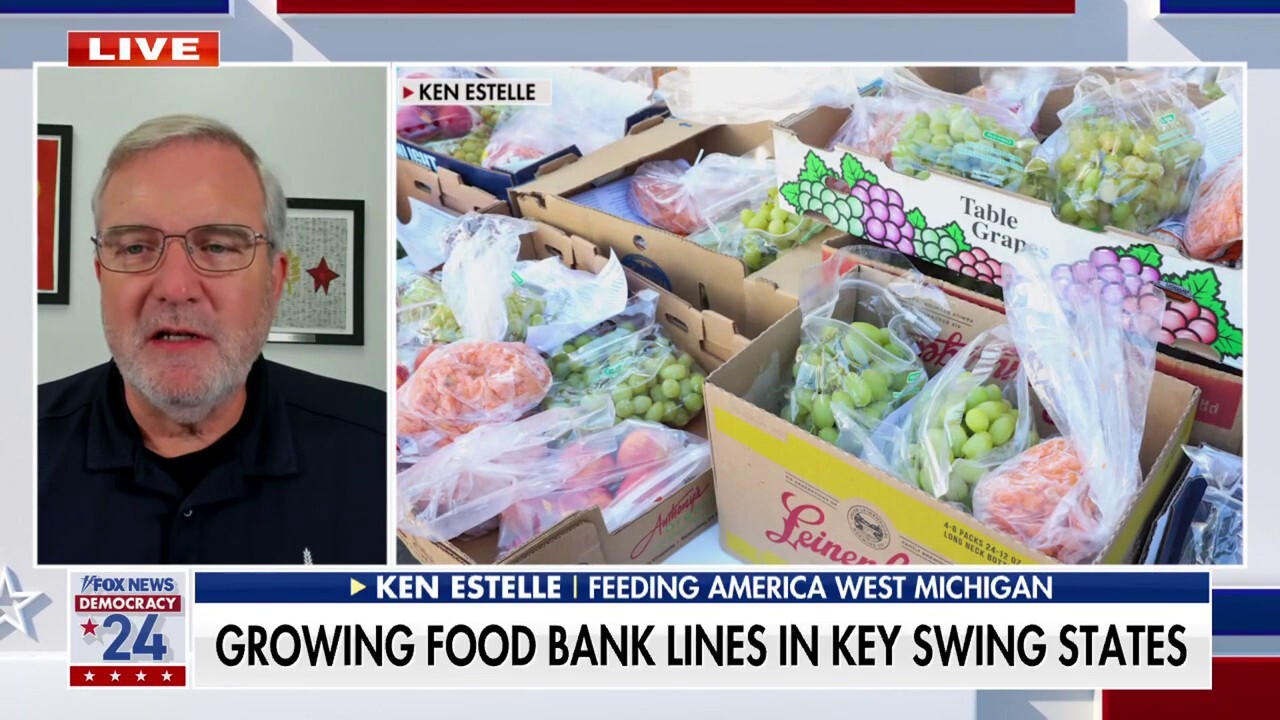
- Michigan Voter Dynamics: While specific 2025 December Michigan food bank line reports are unconfirmed, Feeding America’s national data shows 95% of food banks reported equal or higher demand in October 2025 due to high prices [5], indicating broader inflationary pressures that could sway Michigan voters.
- Sentiment Dissonance: A significant gap exists between consumer pessimism (driven by inflation) and investor optimism (focused on corporate performance), highlighting divergent market and public priorities.
- Swing State Electoral Sensitivity: Michigan’s status as a swing state makes its voter inflation perceptions a critical leading indicator for election results, which may trigger policy shifts impacting monetary and fiscal policy.
- Partisan Polarization: Inflation has deepened political divides in economic views, potentially exacerbating policy uncertainty and political instability.
- Risks:
- Policy Uncertainty: Michigan’s electoral outcome could lead to abrupt changes in economic policy (e.g., monetary tightening/loosening), creating market volatility.
- Consumer Spending Sustainability: Sustained inflation may erode purchasing power, weakening current consumer spending support for markets.
- Opportunities:
- Policy Stabilization: An administration focused on inflation mitigation could stabilize markets by addressing price pressures.
- Sector Gains: Affordable goods/services sectors may benefit from ongoing consumer cost concerns.
Inflation remains a central factor shaping U.S. political stability and electoral dynamics, especially in swing states like Michigan. The consumer-investor sentiment gap underscores market complexity amid economic pressures. Michigan’s voter sentiment on inflation could have far-reaching implications for election results and subsequent economic policies, which may impact market performance. Stakeholders should monitor electoral trends and policy proposals for potential market shifts.
Insights are generated using AI models and historical data for informational purposes only. They do not constitute investment advice or recommendations. Past performance is not indicative of future results.
About us: Ginlix AI is the AI Investment Copilot powered by real data, bridging advanced AI with professional financial databases to provide verifiable, truth-based answers. Please use the chat box below to ask any financial question.