
Cleveland Fed's Beth Hammack Advocates for Steady Rates Into Spring Amid Inflation Wariness
Unlock More Features
Login to access AI-powered analysis, deep research reports and more advanced features
About us: Ginlix AI is the AI Investment Copilot powered by real data, bridging advanced AI with professional financial databases to provide verifiable, truth-based answers. Please use the chat box below to ask any financial question.
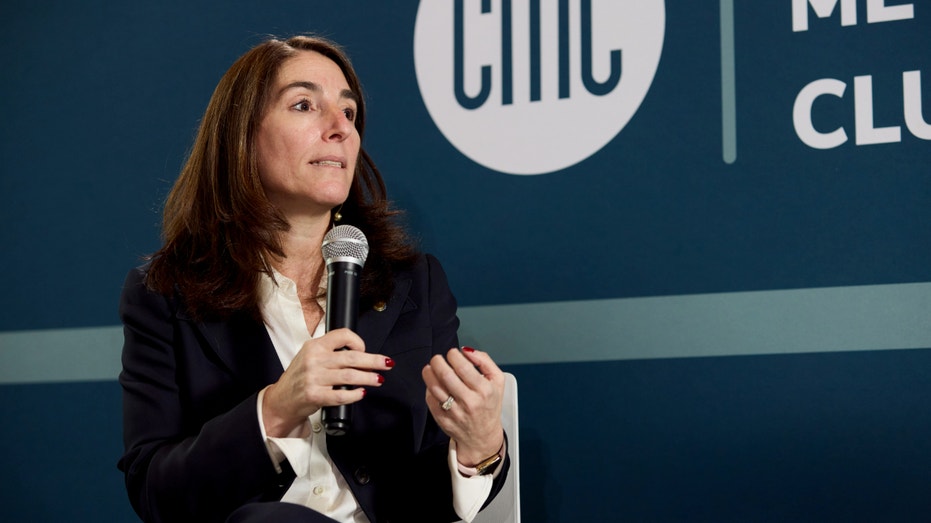
The analysis centers on a 2025-12-21 WSJ interview with Cleveland Fed President Beth Hammack (a 2026 Federal Open Market Committee (FOMC) voting member), where she signaled no immediate need to adjust interest rates for several months and described November’s lower-than-forecast inflation reading (2.7% YoY) as something to be taken “with a grain of salt” [1].
Market dynamics preceding the interview include rate-sensitive sectors (utilities, tech, real estate) performing as top market leaders on 2025-12-20, buoyed by market expectations of aggressive rate cuts (63 bps in 2026) [0]. However, the Fed’s own dot plot projects only one rate cut in 2026, creating a gap between market pricing and central bank guidance. Additionally, November’s inflation data faced quality concerns due to a prior government shutdown, which delayed October data and affected the completeness of the November release [0]. If Hammack’s comments are interpreted as hawkish (prioritizing inflation caution over rate cuts), rate-sensitive sectors that benefited from dovish expectations could experience selling pressure, while the broader market may reassess its rate cut timeline.
- Fed Caution Persists: Hammack’s stance underscores the Fed’s ongoing wariness of inflation, even amid a temporary cooling trend, highlighting the central bank’s focus on sustained inflation reduction rather than short-term data fluctuations.
- Market-Fed Expectation Gap: The divergence between market projections (63 bps of cuts) and the Fed’s dot plot (1 cut) creates vulnerability to market volatility, especially if FOMC members consistently reinforce a cautious rate path.
- Data Quality as a Factor: The government shutdown’s impact on inflation data integrity is influencing Fed officials’ assessments, adding complexity to market interpretation of economic indicators.
- Risks: Rate-sensitive sectors (utilities, tech, real estate) face near-term volatility if the market recalibrates its rate cut expectations downward in response to Hammack’s comments. Increased market uncertainty could also amplify reactions to future inflation reports.
- Opportunities: Sectors less sensitive to interest rates (e.g., consumer staples, industrial goods) may benefit if capital shifts away from rate-sensitive areas. Long-term investors could find value in fundamentally strong companies resilient to rate volatility.
This analysis synthesizes Beth Hammack’s comments, current market expectations, and recent sector performance to highlight the potential for market volatility in rate-sensitive sectors. The Fed’s cautious approach to inflation, combined with the gap between market and central bank rate cut projections, remains a critical dynamic for investors to monitor. The quality of economic data, affected by the prior government shutdown, further complicates the Fed’s decision-making context.
Insights are generated using AI models and historical data for informational purposes only. They do not constitute investment advice or recommendations. Past performance is not indicative of future results.
About us: Ginlix AI is the AI Investment Copilot powered by real data, bridging advanced AI with professional financial databases to provide verifiable, truth-based answers. Please use the chat box below to ask any financial question.