
Government Shutdown Drives Consumer Sentiment to Near Record Lows in November 2025
Unlock More Features
Login to access AI-powered analysis, deep research reports and more advanced features
About us: Ginlix AI is the AI Investment Copilot powered by real data, bridging advanced AI with professional financial databases to provide verifiable, truth-based answers. Please use the chat box below to ask any financial question.
Related Stocks
This analysis is based on the MarketWatch report [3] published on November 7, 2025, which reported that consumer sentiment has declined to near-record low levels due to concerns about the prolonged government shutdown.
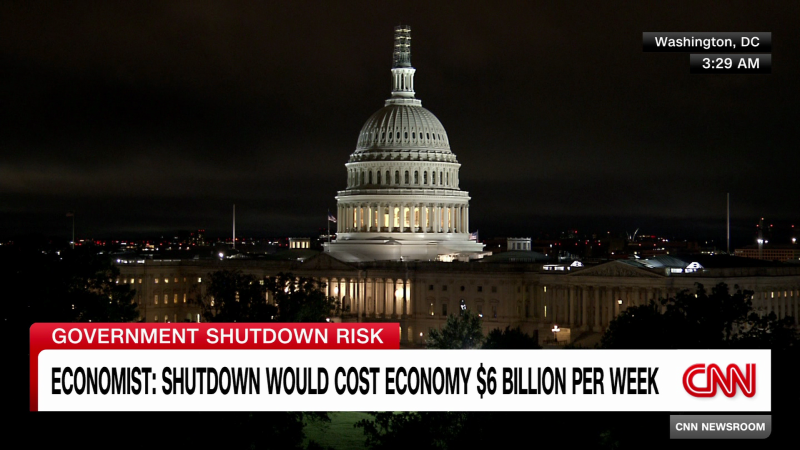
The University of Michigan Surveys of Consumers, led by Director Joanne Hsu, released data showing the consumer sentiment index fell to 50.3 in November 2025, declining from 53.6 in October [0][2]. This represents a significant deterioration in consumer confidence, reaching levels not seen since June 2022 [1]. The primary driver identified is the ongoing federal government shutdown, which has been dragging on for over a month [0].
The timing of this decline is particularly concerning as it coincides with the critical holiday shopping season. Consumer sentiment serves as a leading indicator for retail spending, and such low readings typically precede weaker consumer expenditure patterns [0]. The market has already shown negative reactions, with the S&P 500 down 0.40% on the day of the announcement [0], suggesting investors are factoring in the potential economic implications of reduced consumer confidence.
- Consumer Spending Vulnerability: The record-low sentiment reading since June 2022 suggests potential weakness in upcoming holiday retail sales [1]
- Economic Growth Concerns: Prolonged shutdown effects could extend beyond immediate consumer psychology to actual economic output
- Market Sentiment Correlation: Current market weakness may be exacerbated by poor consumer confidence data [0]
- Policy Uncertainty Risk: The shutdown’s continuation creates additional uncertainty for business planning and investment decisions
- Policy Resolution Catalyst: Any progress toward ending the government shutdown could trigger rapid sentiment recovery and corresponding market rebounds
- Defensive Positioning: Consumer staples and essential services may outperform discretionary sectors during this period
- Data-Driven Trading: Future sentiment releases could serve as leading indicators for retail sector performance
The November 2025 consumer sentiment reading of 50.3 represents a 3.3-point decline from October’s 53.6, driven primarily by concerns over the prolonged federal government shutdown [0][2]. This decline places consumer confidence at near-record low levels, with potential implications for holiday retail sales and broader economic growth [1]. The policy-driven nature of this sentiment decline suggests that resolution of the government shutdown could lead to relatively rapid recovery in consumer confidence and related economic indicators. Market participants should monitor upcoming retail sales data, government shutdown developments, and the December preliminary consumer sentiment release for trend confirmation or reversal [0][3].
Insights are generated using AI models and historical data for informational purposes only. They do not constitute investment advice or recommendations. Past performance is not indicative of future results.
About us: Ginlix AI is the AI Investment Copilot powered by real data, bridging advanced AI with professional financial databases to provide verifiable, truth-based answers. Please use the chat box below to ask any financial question.