
Government Shutdown Causes Second Consecutive Missed Jobs Report Amid Economic Data Blackout
Unlock More Features
Login to access AI-powered analysis, deep research reports and more advanced features
About us: Ginlix AI is the AI Investment Copilot powered by real data, bridging advanced AI with professional financial databases to provide verifiable, truth-based answers. Please use the chat box below to ask any financial question.
This analysis is based on the CNBC report [1] published on November 7, 2025, which reported that the ongoing government shutdown has resulted in the second consecutive missed monthly employment report, creating an unprecedented economic data blackout.
The financial markets are exhibiting clear signs of stress from the prolonged economic data vacuum. Major indices are all declining, with the S&P 500 down 0.48% to 6,664.15 points, NASDAQ Composite falling 0.71% to 22,731.26 points, Dow Jones Industrial Average declining 0.27% to 46,670.11 points, and Russell 2000 underperforming with a 0.92% drop to 2,385.73 points [0]. The technology sector is particularly weak at -1.58%, while consumer cyclical stocks are experiencing the steepest losses at -2.13% [0], indicating investors are reducing exposure to economically sensitive sectors amid the labor market uncertainty.
With official government data unavailable, market participants are relying on alternative indicators that paint a concerning picture:
- ADP Report: Shows private sector added 42,000 jobs in October, better than expected but still indicating weak hiring [1]
- Challenger, Gray & Christmas: Reported 153,074 announced job cuts in October, the highest level for the month in 22 years [1]
- ISM Employment Index: Services at 48.2%, Manufacturing at 46% (both below 50% indicating contraction) [1]
- Bank of America Data: Shows year-over-year payroll growth of 0.5% in October, unchanged from September [1]
Economists surveyed by Dow Jones expect the official report would have shown a decline of 60,000 jobs and an unemployment rate increase to 4.5% [1]. Chicago Fed President Austan Goolsbee described the current environment as a “low hiring, low firing environment” [1].
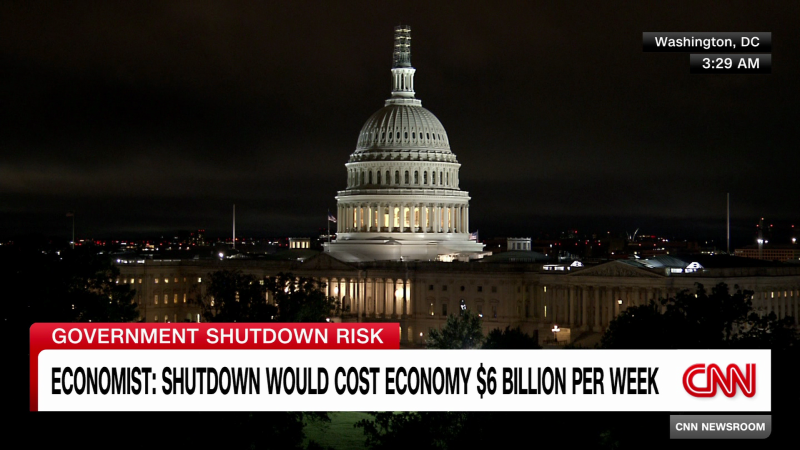
The shutdown, which began on October 1, 2025, has now created the longest government shutdown on record, surpassing previous incidents in 1995-1996 and 2013 [2]. This unprecedented duration raises concerns about the permanent loss of economic data, as October employment information may never be collected if the shutdown continues [2].
The data blackout is creating significant challenges for monetary policy decisions. Goolsbee noted that while alternative data provides some insight, there’s limited information on inflation, giving him pause about further rate cuts [1]. The Federal Reserve is being forced to make critical policy decisions without comprehensive economic data, potentially leading to suboptimal monetary policy outcomes.
Alternative data reveals concerning trends in labor market dynamics:
- Small Business Impact: Businesses with fewer than 250 workers lost 34,000 jobs in October [1]
- Job Openings: Indeed’s job openings index declined to its lowest level since February 2021 [1]
- Wage Growth Disparity: Higher earners seeing 3.7% YoY gains, middle earners 2%, lower income only 1% [1]
This suggests growing inequality and structural weaknesses in the labor market that may be masked by headline employment figures.
The reliance on alternative data sources has significant limitations:
- Scope: Private data covers smaller samples than government surveys
- Methodology: Different collection methods may not be directly comparable
- Historical Context: Limited historical data for comparison during shutdowns
This creates a situation where markets are trading on incomplete and potentially misleading information, increasing the risk of mispricing and volatility.
- Policy Uncertainty: Federal Reserve making decisions without comprehensive data increases the risk of inappropriate monetary policy responses
- Market Volatility: Increased trading volume on rumors and incomplete information could lead to sharp price swings
- Business Planning Disruption: Companies unable to make informed hiring and investment decisions due to lack of economic data
- Consumer Confidence Impact: Economic uncertainty may affect spending patterns and slow economic growth
- Permanent Data Loss: The longer the shutdown continues, the greater the risk that October employment data may never be collected, creating a permanent gap in the economic record [2]
Decision-makers should track:
- Government Shutdown Resolution: When federal operations resume and data collection restarts
- Alternative Data Trends: Continued monitoring of ADP, ISM, and other private indicators for early signals
- Fed Communications: Central bank’s approach to policy without official data
- Market Sentiment: Investor reactions to ongoing uncertainty, particularly in economically sensitive sectors
- Economic Spillover Effects: Impact on consumer spending and business investment decisions
The current situation may present opportunities for:
- Data Analytics Companies: Increased demand for alternative economic data and analysis
- Risk Management Services: Growing need for sophisticated risk assessment tools
- Market Research Firms: Opportunities to provide deeper insights into economic trends
The ongoing government shutdown has created an unprecedented economic data blackout, with the U.S. missing two consecutive monthly employment reports for the first time in history [2]. Markets are responding with declines across all major indices, particularly in technology and consumer cyclical sectors [0]. Alternative data suggests a weakening labor market with economists projecting 60,000 job losses and rising unemployment to 4.5% [1]. The Federal Reserve faces significant policy challenges without comprehensive economic data, while businesses and consumers must navigate increased uncertainty. The situation is particularly concerning due to its unprecedented duration and the risk of permanent data loss if the shutdown continues [2].
Insights are generated using AI models and historical data for informational purposes only. They do not constitute investment advice or recommendations. Past performance is not indicative of future results.
About us: Ginlix AI is the AI Investment Copilot powered by real data, bridging advanced AI with professional financial databases to provide verifiable, truth-based answers. Please use the chat box below to ask any financial question.