
Supply Chain Bottlenecks in North American Natural Gas Power Plants Reshape the Global Power Equipment Industry Landscape and Opportunities for Chinese Manufacturers
About us: Ginlix AI is the AI Investment Copilot powered by real data, bridging advanced AI with professional financial databases to provide verifiable, truth-based answers. Please use the chat box below to ask any financial question.
Related Stocks
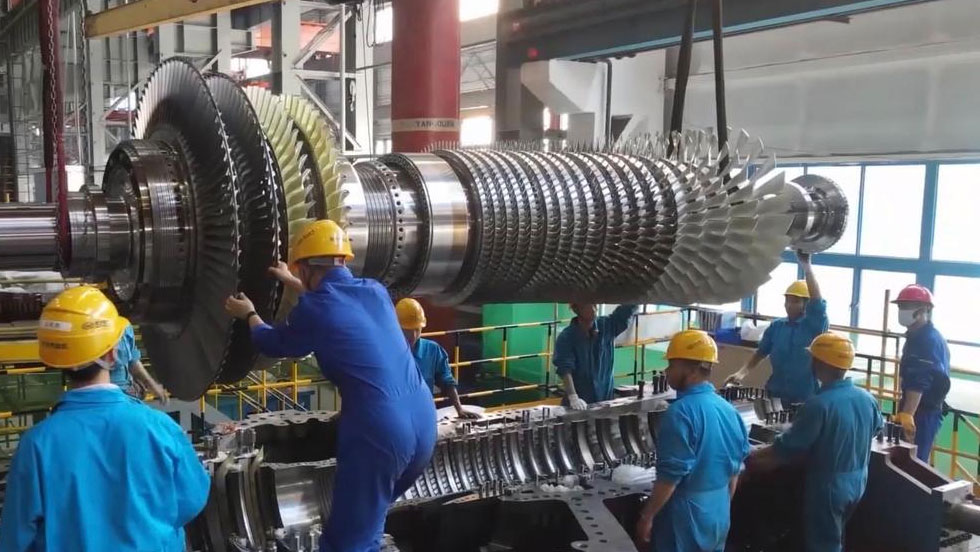
The global power equipment industry is currently facing unprecedented supply chain challenges. According to the latest data, U.S. data center power demand is expected to grow by 1000% between 2024 and 2035[1], and natural gas power plants have become the preferred solution to fill the dispatchable power gap. However, the supply capacity of key equipment lags far behind demand growth:
- The average delivery cycle for gas turbines will reach 243 weeks (nearly 5 years) in 2025[4]
- GE Vernova’s backlog is expected to reach 80GW by the end of 2025, extending to 2029[8]
- The three giants (Siemens Energy, GE Vernova, Mitsubishi Heavy Industries) have limited production capacity and are unable to expand significantly in the short term
- The delivery cycle for large power transformers has reached 210 weeks (over 4 years)[5]
- The delivery time for distribution transformers is 2-3 times that before the pandemic, up to 2 years[5]
- The delivery cycle for special transformers even reaches 3-6 years[5]
According to industry analysis, the upper limit of new natural gas power plants in North America during 2025-2030 is approximately 58GW[2], while U.S. utility companies have committed to 64GW of new dispatchable capacity[9], resulting in a significant supply-demand gap. This magnitude of mismatch is forcing some companies to reconsider coal power options[3], highlighting the far-reaching impact of supply chain bottlenecks on energy transformation.

- Although gas turbine manufacturers are expanding production capacity, order backlogs may continue for a long time[4]
- Experts believe these expansion measures are unlikely to “significantly reduce” waiting times, which currently can be as long as 7 years[4]
- Manufacturers need to make capital commitments 5 years or more in advance, changing the traditional EPC contract process[12]
- Transformer shortages threaten grid stability, and the problem becomes more prominent as load increases[5]
- The delivery time for high-voltage circuit breakers reaches approximately 151 weeks, nearly 3 years, which is twice the pre-pandemic level[5]
- The entire power equipment ecosystem faces similar issues of extended delivery cycles
Under severe supply constraints, the price system for power equipment is undergoing fundamental changes:
- New order pricing is higher than current orders, reflecting supply-demand imbalance[8]
- Data center customers are starting to seek “solutions integrated with power generation and electrical equipment”[8]
- Traditional equipment suppliers are shifting from single equipment sales to integrated power solution providers
According to brokerage API data[0], Jereh Group (002353.SZ) performed brilliantly in 2025:
- The stock price has risen 100.28% year-to-date, with a one-year increase of 112.68%
- Market capitalization reached 72.7 billion USD, with a P/E ratio of 25.92 times
- Net profit margin is 18.04%, ROE reaches 13.06%, indicating good profitability
- As an oil and gas equipment service provider, Jereh has technical accumulation in gas turbine-related equipment fields
- Q3 2025 revenue was 3.52 billion USD, showing strong business scale[0]
- Current ratio is 2.52, quick ratio is 1.92; the financial condition is stable, with expansion capabilities
Shanghai Electric displayed cutting-edge technologies such as a 300MW hydrogen-blended heavy-duty gas turbine at the 2025 China International Industry Fair[10], demonstrating the technical progress of Chinese manufacturers in the high-end power equipment field. Traditional power equipment giants like Dongfang Electric and Harbin Electric have also accumulated considerable manufacturing capabilities in gas turbines and transformers.
- Compared with European and American manufacturers, Chinese manufacturers have greater flexibility in production capacity expansion
- Complete industrial chain supporting facilities provide Chinese manufacturers with cost advantages
- International cooperation such as the “Belt and Road Initiative” has laid the foundation for Chinese power equipment to enter the global market

Chinese equipment manufacturers need to obtain international standard certifications such as UL and IEC, which usually take 12-24 months. Early layout of certification systems is a prerequisite for seizing opportunities.
By establishing strategic cooperation with local engineering companies and installation service providers in North America, Chinese manufacturers can reduce market entry barriers and quickly respond to customer needs.
Based on current delivery cycle analysis, 2025-2027 is the key window period for production capacity expansion. Manufacturers that can realize capacity release during this period will gain first-mover advantages.
- Short-term: Focus on breaking into the mid-end gas turbine and distribution transformer markets
- Mid-term: Move into high-end heavy-duty gas turbines and UHV transformer fields
- Long-term: Layout next-generation technologies such as hydrogen-blended gas turbines and smart grid equipment
The uncertainty in Sino-US trade relations requires Chinese manufacturers to establish diversified market layouts and avoid over-reliance on a single market.
It is necessary to strengthen independent innovation, establish independent intellectual property rights in key core technology fields, and reduce technology dependence risks.
- Small and medium-sized gas turbine equipment (50-200MW class)
- Distribution transformers and switchgear
- Related accessories and maintenance service markets
Focus on Chinese power equipment manufacturers that already have a layout in North America or have the ability to enter quickly, especially those with international certifications and localized service capabilities.
It is expected that the market share of Chinese manufacturers in the global power equipment market will increase from the current 8-15% to 25-35%, and may reach more than 40% in specific segmented markets.
Focus on leading enterprises that have made smooth progress in technical upgrading and capacity expansion, as well as service providers that can offer integrated power solutions.
- Hydrogen-blended combustion technology
- Intelligent and digital power equipment
- Microgrids and distributed generation systems
Enterprises that transform from pure equipment manufacturing to technology standard setters and integrated solution providers will obtain higher valuation premiums.
Supply chain bottlenecks in North American natural gas power plants are reshaping the competitive landscape of the global power equipment industry, providing Chinese manufacturers with a once-in-a-lifetime historic opportunity. Chinese enterprises with relevant technical accumulation and financial strength, such as Jereh Group, are expected to achieve leapfrog development in this industry landscape reshaping if they can effectively address challenges like technical certification and localized services.
However, opportunities and challenges coexist. Chinese manufacturers need to continue investing in technological innovation, quality control, service network construction, etc., to truly convert the supply chain window period into long-term competitive advantages. For investors, closely monitoring the internationalization progress, technical breakthroughs, and market layout changes of relevant enterprises will be the key to seizing this historic opportunity.
[0] Gilin API Data - Jereh Group (002353.SZ) Financial Data and Market Information
[1] Rystad Energy Research Report - Data Center Power Demand Forecast (March 2025)
[2] Oil Price - U.S. Grid Investment Surges Amid AI Power Demand Spike (January 2025)
[3] Utility Dive - Gas Turbine Manufacturers Expand Production but Order Backlogs May Continue (September 2025)
[4] The New York Times - Plane-sized Machines May Hinder Gas Power Plant Construction Race (April 2025)
[5] The Conversation - Supply Chain Delays and Equipment Price Increases Threaten the Grid
[6] Utility Dive - Transformer Supply Bottlenecks Threaten Grid Stability as Load Grows
[7] Bloomberg - AI-driven Gas Turbine Demand Presents New Energy Risks
[8] Utility Dive - GE Vernova Optimistic About Electrical Infrastructure, Turbine Backlog Grows
[9] Morningstar DBRS - U.S. Electric Utilities Enter Investment “Super Cycle” (October 2025)
[10] Financial Times - Shanghai Electric Displays Cutting-edge Innovations at CIIF 2025
[11] Power Magazine - Ready, Set, Go: How Disruption is Changing EPC Contracting
[12] Power Magazine - LG&E and KU Propose $3.7 Billion Power Construction: 13GW of New Gas Power Plants
Insights are generated using AI models and historical data for informational purposes only. They do not constitute investment advice or recommendations. Past performance is not indicative of future results.
About us: Ginlix AI is the AI Investment Copilot powered by real data, bridging advanced AI with professional financial databases to provide verifiable, truth-based answers. Please use the chat box below to ask any financial question.