
2026 Global Asset Allocation: Commodity & Tech Opportunities Amid US-China Policy Differentiation
About us: Ginlix AI is the AI Investment Copilot powered by real data, bridging advanced AI with professional financial databases to provide verifiable, truth-based answers. Please use the chat box below to ask any financial question.
Currently, the Federal Reserve has stabilized its expected federal funds rate at the end of 2025 at 3.66%, while the FOMC dot plot still includes expectations of continued interest rate cuts starting from 2026 (reserving one to two 25bp cuts per year), indicating that the US is still in a transitional phase towards “gradual” easing, but remains patient with inflation—real interest rates are still positive and above the core PCE target of around 2.5% [1][2]. In contrast, China’s policy backdrop for 2026 remains “more proactive fiscal policy + moderately loose monetary policy,” emphasizing “cross-cycle adjustment” and the “financial power” strategy. Monetary policy tools will lean towards structural support (reserve requirement ratio cuts, targeted liquidity, etc.) to complement fiscal expansion, while stressing enhanced policy coordination and precision [3][4][5]. The divergence in US-China policy rhythms, combined with the US not yet seeing a clear decline in inflation and China’s focus on domestic demand and high-quality development, together form the main backdrop for global asset allocation in 2026.
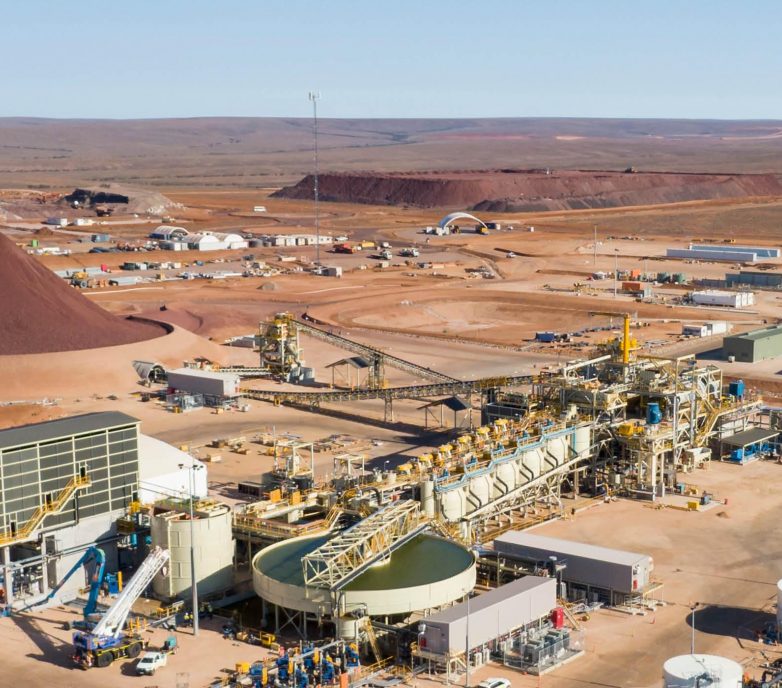
Against the backdrop of “potential interest rate cuts in US stocks + continued weakening of the US dollar,” copper prices—due to depleted inventories, production cuts by major miners, and demand stimulus from the US for high-end technology and clean energy—are being viewed by multiple investment banks as a shortage theme that “may reach 12,000-15,000 US dollars per ton in the first half of 2026” [6]. Global inventories are approaching historical lows, and a large number of warehouse receipts in inventories have been marked as “canceled,” meaning spot supply is tight and cannot be quickly increased; China’s combination of “anti-involution,” “governance of high-energy-consuming capacities in steel and cement,” and cross-cycle regulation has led policy expectations to tilt towards high-quality upstream resources, especially long-term capital expenditures on power, grid, and electrification infrastructure [7][8]. For coal: On the supply side, constraints continue under local deleveraging and “rectification of inefficient capacity” policies; port inventories are low and the restart of futures has increased price elasticity. On the demand side, although dragged down by the property downturn, resilience remains under the logic of “volatility in new energy consumption + recovery of coal use in chemical industry,” and the policy’s clear “stable production and supply guarantee + structural clearing” also implies that coal prices have bottoming support and cyclical upward momentum [7][8].
Therefore, amid the evolution of “inflation-debt neutralization” risks, high-energy-consuming raw materials like copper and coal have three advantages: ① Directly tied to commodity CPI/PPI—price increases can hedge against real economy inflation; ② Strong structural constraints on the supply side, limited short-term elasticity; ③ Definite demand in China’s large infrastructure and new energy investments supported by fiscal + structural monetary policies. But at the same time, we need to be vigilant of their volatile nature (especially coal’s seasonality and policy sensitivity), as well as the potential downward pressure on global demand from US potential tariffs and weak global economy. Therefore, risk management can be carried out by selecting leading companies with low leverage and high profit quality, as well as mining leaders with pricing power, combined with strategies like futures/ETFs.
Even as the macro environment tends towards “low valuation + high policy support,” structural tech sectors represented by AI, semiconductors, embodied intelligence, and solid-state batteries still show potential for “dual repair of valuation and earnings.” Institutional statistics show that 24 companies in these fields are expected to have a year-on-year net profit growth rate of over 30% in 2026, and there is still a discount of more than 30% compared to their valuation and rolling P/E ratio [9]. Meanwhile, from the demand perspective, capital expenditures on AI chips, storage, packaging, and end-side hardware of complete machines will remain high from 2026 to 2028. In tracks with signs of shortage like 3D NAND, DRAM, and advanced packaging (e.g., equipment expenditure exceeding 100 billion USD, NAND price increase of 20%, DDR price increase of 35%), there are structural high-growth opportunities [10].
However, the “high valuation + growth expectations” of structural tech stocks make them particularly sensitive to macro sentiment: once global liquidity tightens or the US dollar strengthens, their valuation premium based on future earnings is prone to repricing, and they have high correlation with debt/GDP or upcoming policy adjustments (especially when US inflation has not yet returned to the target and there may be a “hawkish miscalculation”). In contrast, although upstream assets like copper and coal are cyclical, once supply-demand mismatch is established, their price increases are directly transmitted to cash-flow companies, thus providing a clearer real hedge in the “inflation-debt neutralization” scenario.
Under the current US-China policy divergence, it is recommended to adopt a “commodity + tech” dual-engine strategy: select leading companies in securitized copper/coal assets with pricing power, strong cost control capabilities, and diversified export/domestic sales structures to directly hedge against inflation and policy uncertainty; at the same time, retain a small proportion of high-growth tech positions, focusing on AI computing power, storage, and equipment segments (pay attention to valuation repair space and earnings realization). In terms of position structure, a “core (high-quality resources like copper and coal) + satellite (structural tech and related equipment)” allocation can be adopted, using derivatives like futures, ETFs, or convertible bonds to buffer cyclical volatility.
If further exploration of individual stocks and evaluation of financial and technical indicators are needed, it is recommended to enable the deep research mode to retrieve detailed A-share/US-share financial reports, valuation, and industry research from brokerage databases to complete more systematic scoring and comparative analysis.
[1] MacroMicro Finance M Square - “US-Fed Year-End Interest Rate Expectation (2025)” (https://sc.macromicro.me/series/44294/us-fed-year-end-interest-rate-expectation-2025)
[2] Securities Times - “Special Topic | Focus on the Fed’s Third Interest Rate Cut This Year” (https://www.stcn.com/topic/detail/526.html)
[3] Yicai - “2026 Monetary Policy Stance! Industry Insiders: Cross-Cycle Adjustment Efforts Will Increase” (https://m.yicai.com/news/102946048.html)
[4] CLS Report - “New Special Bond Quota Expected to Expand to 5 Trillion Yuan…” (https://www.cls.cn/detail/2227147)
[5] Jiemian News - “2026: Moderate Easing + Cross-Cycle Adjustment—RRR Cuts and Interest Rate Cuts Are Still Possible, But Low Frequency and Small Magnitude” (https://m.jiemian.com/article/13735285.html)
[6] FastBull - “Behind the Surge in Copper Prices: A Global Inventory Battle Triggered by Tariffs” (https://m.fastbull.com/cn/news/detail/4359911_1)
[7] NetEase - “Coal’s ‘Resilience’ and ‘Solidity’ | Research Report” (https://www.163.com/dy/article/KGIN0UIJ05567I2C.html)
[8] Investing.com Chinese Edition - “Orient Securities: The Supply-Demand Pattern of the Coal Industry Has Reversed…” (https://cn.investing.com/news/stock-market-news/article-3128813)
[9] Securities Times - “24 Tech Potential Stocks Released: Valuation and Earnings May See Dual Repair” (https://www.stcn.com/article/detail/3517969.html)
[10] Eastmoney - “Internet Giants Intensively Layout End-Side AI Hardware; Storage Chips May Rise by 35% in Q4!” (https://finance.eastmoney.com/a/202512123590094895.html)
Insights are generated using AI models and historical data for informational purposes only. They do not constitute investment advice or recommendations. Past performance is not indicative of future results.
About us: Ginlix AI is the AI Investment Copilot powered by real data, bridging advanced AI with professional financial databases to provide verifiable, truth-based answers. Please use the chat box below to ask any financial question.