
Bubble Mart vs Disney: Business Model and Investment Value Analysis
About us: Ginlix AI is the AI Investment Copilot powered by real data, bridging advanced AI with professional financial databases to provide verifiable, truth-based answers. Please use the chat box below to ask any financial question.
Based on an in-depth analysis of the business models of Bubble Mart and Disney, I will conduct a systematic analysis from three dimensions: sustainability of investment value, impact of FMCG attributes, and valuation models:
Disney adopts an integrated industry chain model of “Content-Platform-Experience-Consumption”, creating IP through film and television content, disseminating it via streaming platforms, providing immersive experiences through theme parks, and finally achieving diversified monetization through consumer products and IP licensing [3]. The characteristics of this model are:
- High Investment & Long Cycle: A film takes 5-10 years to develop with an investment of hundreds of millions of dollars, but the IP lifecycle can reach over 90 years (e.g., Mickey Mouse)
- Diversified & Decentralized Business: The entertainment segment accounts for 45% of revenue, the experience segment contributes 59% of profits, and the business structure is relatively stable [2]
- Low Growth & High Stability: 2024 P/E ratio is about 15x, stock price has decreased by 6% over 10 years, and dividend yield is low [3]
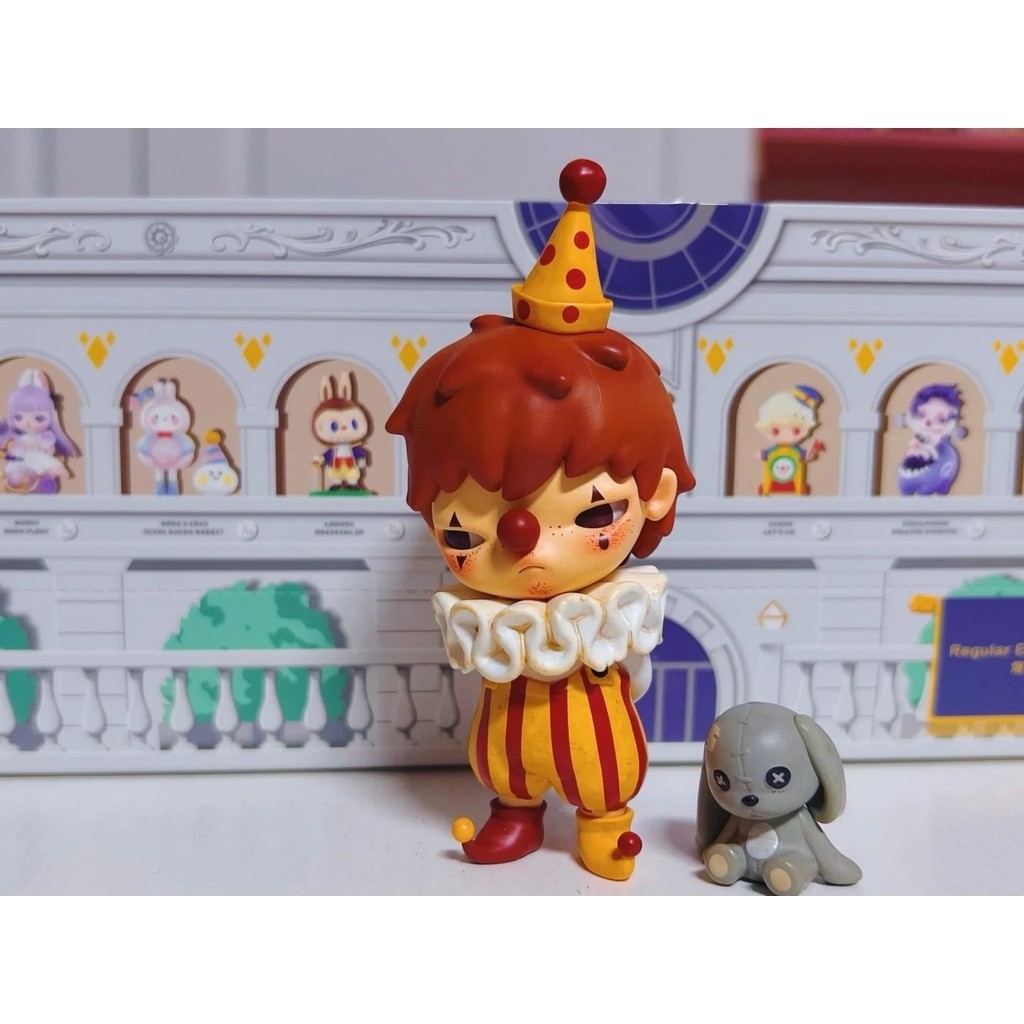
Bubble Mart adopts an “image-driven IP” strategy, mainly winning through visual design; consumers purchase IP designs and the emotional value they represent [3]. Its core characteristics are:
- Low Cost & Fast Development: The development cycle for a single IP is 5-12 months, with an investment of approximately 1 million yuan, and the IP lifecycle is 3-5 years [3]
- Highly Concentrated Business: Trendy toy sales account for over 95% of revenue, with a gross margin as high as 70% [2]
- High Growth & High Volatility: 2024 revenue increased by 106.9% to 13.04 billion yuan, and net profit attributable to parent company increased by 188.8% to 3.125 billion yuan [1]
- Extremely High Capital Efficiency: ROE increased from 13.93% in 2023 to 29.26% in 2024, with excellent return on capital [4]
- Globalization Breakthrough: Overseas revenue in Q1 2025 increased by 475%-480% year-on-year, showing significant results from the internationalization strategy [1]
- Light Asset Operation: Asset-liability ratio is only 26.80%, current ratio is 3.63, and financial structure is stable [4]
- Short IP Lifecycle: Needs to continuously launch new IPs to maintain popularity, with the risk of “peak popularity” [5]
- Volatility in Speculative Demand: After the “speculative premium” in the secondary market disappears, real consumer demand will be tested [5]
- Single Business Structure: Over-reliance on trendy toy sales, resulting in relatively weak risk resistance [2]
Expert analysis points out that whether Bubble Mart can transition from “design-driven” to “content-driven” is the key to its long-term value [1]. Currently, the company has started to attempt content transformation, such as producing the animation “LABUBU and Friends” and exploring the “content + IP” model [2].
- High Gross Margin & High Growth: 2024 gross margin was 66.8% and net margin was 26.1%, both showing an upward trend [1]
- Obvious Valuation Premium: The current P/E ratio is about 49x (2024), significantly higher than traditional manufacturing [4]
- Strong Cash Flow: Operating cash flow in 2024 was 4.598 billion yuan, with good financial conditions [4]
- Sustainability of Growth: Analysis predicts that revenue growth rates from 2025 to 2027 will be 77.6%/50.6%/38.8% respectively, showing a downward trend [4]
- Valuation Regression Pressure: As it returns from “financial asset” to “trendy toy” positioning, the high P/E ratio faces correction pressure [5]
- Challenges in Overseas Expansion: Although growth is rapid, the overseas operating expense ratio is relatively high, affecting overall profitability [4]
- Bubble Mart: Expected P/E ratio in 2025 is about 34.9x; PEG is reasonable but growth sustainability needs attention [4]
- Disney: Current P/E ratio is about 15x, target P/E ratio in 2027 is 18x, with conservative valuation [6]
- Bubble Mart: Suitable for growth investors who are optimistic about China’s consumption upgrade and globalization trends; need to accept high volatility
- Disney: More suitable for value investors pursuing stable returns, providing reliable dividends and relatively steady growth
- Bubble Mart: Decline in IP popularity, underperformance of overseas expansion, retreat of speculative demand
- Disney: Intensified streaming competition, decline of traditional TV business, high leverage pressure
Bubble Mart’s “content-free IP” model has shown extremely strong profitability and growth at the current stage, but compared to Disney’s “story-driven IP” model, it still faces challenges in the sustainability of long-term investment value. Its FMCG attributes bring short-term high growth and high gross margins, but also mean that continuous innovation is needed to maintain consumer interest.
From an investment perspective, Bubble Mart is more suitable for growth investors with strong risk tolerance who are optimistic about the globalization prospects of Chinese brands; while Disney is more suitable for long-term value investors pursuing stable returns. If Bubble Mart can successfully transition from “design-driven” to “content-driven”, it is expected to truly rival Disney and build a more sustainable global IP empire [1][3].
[0] Jinling API Data
[1] Guancha.cn - “Bubble Mart’s ‘New Story’: Can It Support Ambitions to Rival Disney?” (https://www.guancha.cn/qiche/2025_06_17_779686.shtml)
[2] Ebun.com - “How Many Stories Are Missing Between LABUBU and LinaBell?” (https://m.ebrun.com/598593.html)
[3] Huxiu.com - “Disney’s Business Model Is More Stable Than Bubble Mart’s” (https://www.huxiu.com/article/4815328.html)
[4] Bubble Mart 2024 Annual Report and Brokerage Research Report (https://pdf.dfcfw.com/pdf/H3_AP20250326263062.pdf)
[5] The Paper - “Bubble Mart: Skyrocketing Performance, Capital Fears High Valuations” (https://m.thepaper.cn/newsDetail_forward_32182662)
[6] TIKR.com - “Walt Disney Stock Prediction: Where Analysts See It Going by 2027” (https://www.tikr.com/zh/blog/walt-disney-stock-prediction-where-analysts-see-it-going-by-2027)
Insights are generated using AI models and historical data for informational purposes only. They do not constitute investment advice or recommendations. Past performance is not indicative of future results.
About us: Ginlix AI is the AI Investment Copilot powered by real data, bridging advanced AI with professional financial databases to provide verifiable, truth-based answers. Please use the chat box below to ask any financial question.